How I overcame my fear and found my voice as a writer
I first heard of Medium last fall when a fellow writer in a nonfiction workshop mentioned it. Since I was aiming for publication in literary journals, to develop a “publication resume” that might attract the attention of a future agent or publisher for my memoir-in-progress, Medium’s self-publishing format didn’t seem like a good fit. I know the rule: if you want to publish in literary journals, don’t publish anywhere else first, not even on your own blog.
Medium intrigued me, however, so I checked it out. Cue instant overwhelm.
How could anyone possibly gain an audience with so much content, so many people making their voices heard? It’s worth noting that I am easily overwhelmed and often flummoxed by social media and technology in general.
I am also afraid to speak.
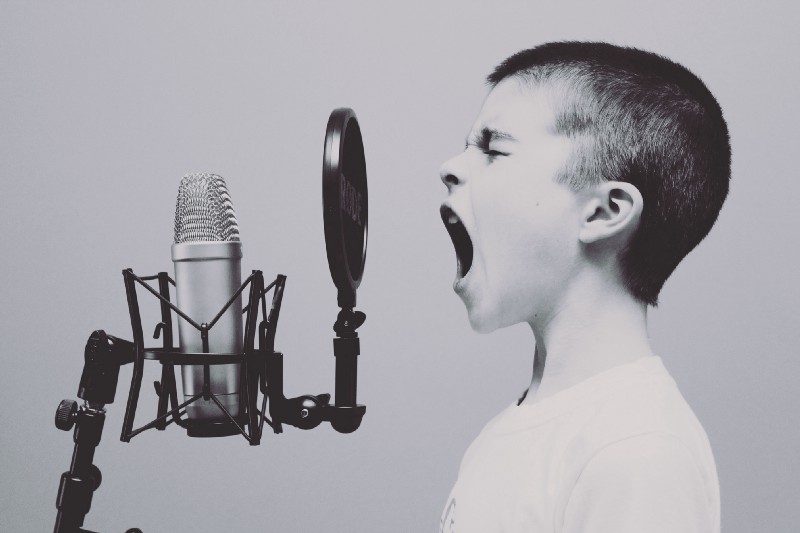
I’ve never forgotten what my mother said to me when I was five: “Children are to be seen and not heard.” I had committed the sin of speaking to the plumber who came to fix a busted pipe. My mother reinforced her message with a tight grip around my tiny wrist and a look that dared me to speak again. To anyone. Ever.
That message has been stuck on repeat for more than forty years.
Medium struck me as a place for opinion or how-to pieces. Literary work seemed restricted to fiction due to the absence of a topic for nonfiction.
My goal is to contribute to the collective story of the human experience. To connect with a stranger over a shared, “You, too?”
Although Medium felt like an unlikely place for my writing, I tested the waters anyway. Last December, I published my first piece on Medium, a short meditation on self-kindness that emerged from a journal entry two years before. I didn’t expect much from it. Would anyone even see it? No, they would not.
My piece languished.
At the same time, the first essay I submitted to literary journals was rejected by every publication I sent it to. It’s to be expected. Few are lucky enough to hit the jackpot on the first spin. But still, rejection stings.
I needed to know my voice mattered, and I didn’t want to give up on my essay. I discovered Duotrope’s feature of searching publications by acceptance rate (as reported by users), which led me to Fourth & Sycamore, the online literary journal of the Greenville, Ohio Public Library.
Of the handful of individual submitters, 30% were accepted. I liked the quality of work published at Fourth & Sycamore, and if accepted, mine would be among the few essays alongside poems, artwork and book reviews. I submitted.
The jackpot flowed. I had my first acceptance.
The day it was published, I shared the link with my friends on Facebook. I figured that was it. It had, to use a term I learned in journalism school, been put to bed. But this is not 1990. The world is vast and full of networks. And my essay had been well received. It resonated with people, some of whom were strangers. Readers asked for more.
No longer could I hide behind the excuse that no one cared what I had to say.
I searched Facebook for writing groups where I could make connections and possibly swap critiques. I had three essays in need of revisions before sending into the months-long black hole that is the literary journal submission process.
I get it; this is how the game is played. We write, we submit, we write some more while we wait to hear the result. It can get lonely. And rejection, especially for someone without a community of writers to lean on for support, can lead to silence by a raging inner critic that sounds strikingly like my mother.
I needed community.
Now that I was published, I felt like I had more authority to speak as a writer, like publication had given me a voice I didn’t have before. I realize my voice was there, and the only one stripping me of my authority was myself. My mother in the background telling me to be seen but not heard.
I joined a few Facebook groups and read astounding pieces published in places I’ve been rejected from or believe for whatever reason that I’m not ready for. That my craft isn’t polished enough, not perfect enough. Another ingrained characteristic courtesy of my mother, who demanded such perfection in cleaning that today I hire someone to clean my house. Nothing takes me back to my childhood like scrubbing toilets.
A fellow Facebook group member Karie Fugett shared one of her essays featured in Medium’s Human Parts and originally published in Entropy, one of my publication targets. I was so moved by her piece, I cried. And I realized that in dismissing Medium, I had dismissed the potential for community.
I also realized that I knew nothing about my rights as a writer. I didn’t understand that Fourth & Sycamore’s claim of first electronic rights and non-exclusive electronic archival rights meant only that I had given them permission to publish it and keep it on their site. The copyright on my essay reverted to me immediately upon publication.
My writing is, after all, my writing.
How different from the academic world I come from where articles are hidden behind the paywall of massive publishing houses that own nearly the entirety of academic literature.
Now that I knew personal essays were welcome on Medium, and that I was free to republish, I imported my essay using Medium’s import feature. The academic in me loves the automatic attribution to the original source. Per advice on publishing on Medium, I waited a couple of weeks before sharing. It has to do with search engines and site authority, which is about as technical as I can get on the subject.
To my amazement, my essay got claps.
I didn’t understand how people were seeing it since my only Medium followers were a few inactive college friends. Then I noticed it had been picked up by Medium’s Family curators. It didn’t gain thousands of views, but it gained more than had it sat solely in my little cyber corner of Medium.
A thread on one of my Facebook groups asked members to share their Medium-published work, which I gladly did. From that post, I was invited to republish in Indelible Ink, a new Medium publication with a goal I admire: Nonfiction that grabs, stories that last. Yes! What a perfect place for my essay, and I love supporting people who are realizing their dreams.
My essay Smokescreen gained as much traction through Indelible Ink as it did being curated. I gained followers, and the lonely piece I posted in December even got some love. Sending my published essay to a former writing classmate led to us starting a critique group with a set schedule. Community and structure — as essential as food and water if I am to keep writing.
And I must keep writing. I finally realize my mother was wrong. People want to hear what this kid has to say.
Originally published in Indelible Ink on Medium on June 19, 2019.

 Krista Schumacher
Leave a comment